
Let’s be honest — washing is the part that puts most parents off cloth diapers before they’ve even started. But here’s the truth: once you’ve done it a few times, it becomes as automatic as doing any other laundry. You just need to know the logic behind it, and the rest follows.
Why the Wash Routine Matters
Cloth diapers sit against your baby’s skin all day. They need to come out of the wash genuinely clean — not just smell-free, but free of bacteria, detergent residue, and ammonia buildup. A good routine protects your baby’s skin and keeps your diapers lasting for years.
The Basic Wash Routine
1. Deal with solids first Shake or scrape any solid waste into the toilet before the diaper goes anywhere near your wash pile. If your baby is exclusively breastfed, skip this step — breastfed poop is water-soluble and washes out completely on its own.
2. Cold rinse Always start cold. Hot water on a soiled diaper sets stains and locks in ammonia smell. A cold rinse first flushes out the bulk of the waste before the real wash begins.
3. Main wash — warm water, good detergent This is where the cleaning actually happens. Wash at 40–60°C with your detergent. Don’t cut corners here — use a full dose.
4. Rinse well Do a final rinse to clear out all detergent. Residue left in the fabric is one of the most common causes of diaper rash and is also why diapers sometimes stop absorbing properly over time.
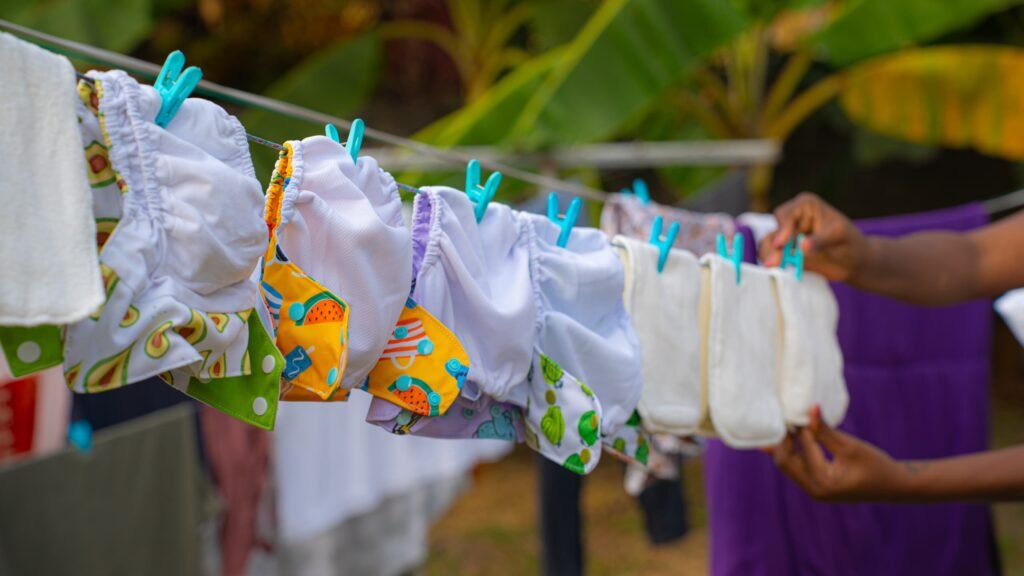
5. Dry in the sun Always aim for the sun. More on why below.
Hand Washing vs Machine — Both Work
If you’re hand washing: Use a basin or bucket. Cold rinse first, drain it out, then wash with warm water and detergent. The key is agitation — scrub and squeeze the fabric well. Rinse until the water runs completely clear, not just mostly clear.
If you’re machine washing: Set it to a full load, even if you only have a few diapers. Cloth diapers need water volume to get clean. Avoid eco or half-load settings — they don’t use enough water to rinse properly.
Choosing Your Detergent
You don’t need a special cloth diaper detergent. You need a regular detergent that does NOT contain fabric softener or optical brighteners — both are damaging to cloth diapers over time.
Powder vs liquid: Powder is generally better for cloth diapers. It rinses out more cleanly, especially when hand washing. Liquid can leave residue if you’re not using enough water.
Bar soap: Avoid it for diapers. Bar soap builds up in the fabric fibres over time, causing your diapers to repel liquid instead of absorbing it. It’s also hard to rinse out completely. Save it for other laundry.
What works and is easy to find in Tanzania: Upcoming mwana baby wash, Toss, Kleensoft (antibacterial, non scented one), Maq, Persil, Omo, and Ariel powder — all solid choices, all available at your local duka or supermarket.
Sun Drying Is Your Secret Weapon
If you’re cloth diapering in Tanzania, you have an advantage that parents in rainy climates can only dream about — reliable sun, almost every day.
Sunlight is a natural sanitiser. UV rays kill bacteria and bleach out stains without any chemicals. A diaper that comes out of the wash with a faint stain will often come out of a few hours in the sun looking brand new. This is not a myth — it genuinely works.
A few tips:
- Turn diapers inside-out before hanging — protects the outer fabric from fading
- Even a hazy or overcast day provides some UV benefit
- If you’re drying indoors, use a fan to speed up drying and prevent that musty smell
Deep Wash and Stripping — When Your Diapers Need a Reset
Even with a good routine, diapers can build up residue over time — from detergent, from the minerals in hard water, or from ammonia. You’ll know it’s time to strip when:
- Diapers smell strongly of ammonia right after washing
- Liquid is beading off the diaper instead of soaking in (this is called repelling)
- Stains won’t shift no matter what you do
How to strip: Run your diapers through several washes with then rinse until the water is completely clear. For hard water buildup specifically, a small amount of white vinegar in one rinse cycle can help — but don’t use vinegar regularly, it breaks down elastic over time.
Strip every few months as routine maintenance, or whenever you notice the signs above.
Storing Dirty Diapers Between Washes
Most parents wash every 2–3 days rather than after every single change. In between, you need somewhere to keep soiled diapers that won’t become a smell or hygiene problem. A repurposed bucket with a lid works great.
Dry pailing is the way to go — store dirty diapers in a lidded bucket or wet bag, dry, with no soaking in water. Soaking diapers (as older methods recommended) damages the elastic, encourages bacterial growth, and creates a drowning hazard for small children. Don’t do it.
Practical tips:
- A bucket with a mesh liner makes transfer to the wash easy — just lift the liner and go
- A few drops of tea tree oil at the bottom of the bucket keeps odour under control
- In Dar es Salaam heat and humidity, don’t leave wet diapers sitting longer than 2 days — wash before then
The Golden Rules for Making Diapers Last
Cloth diapers that are cared for properly last 2–3 years and can go on to a second child. The things that shorten their life: tumble drying on high heat, fabric softener, bleach, and soaking in water. Avoid those four and your stash will go the distance.